
"Je ne regrette rien."
Louis Sahagun on 43 years as a reporter for the L.A. Times and the current state of the LA River.

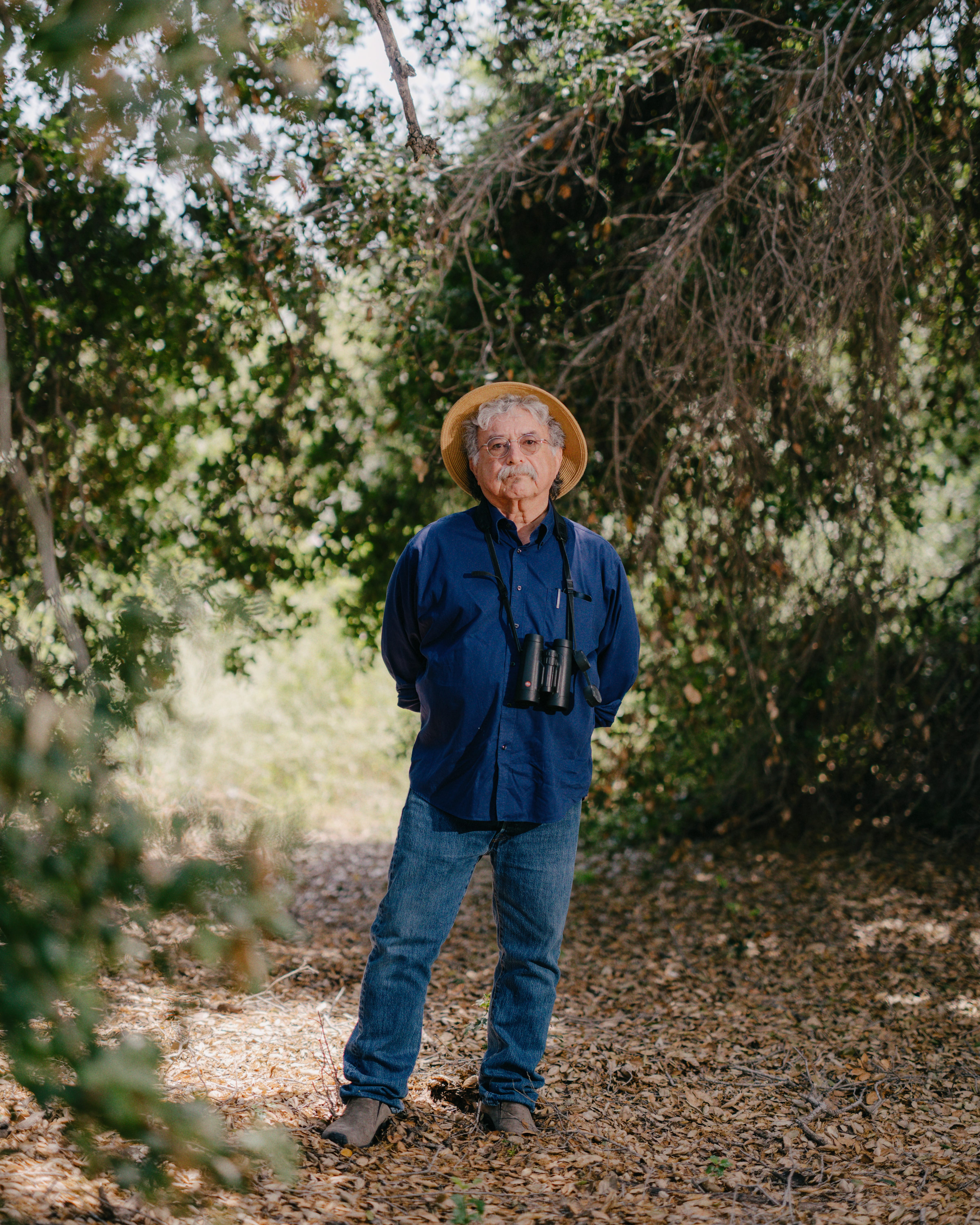
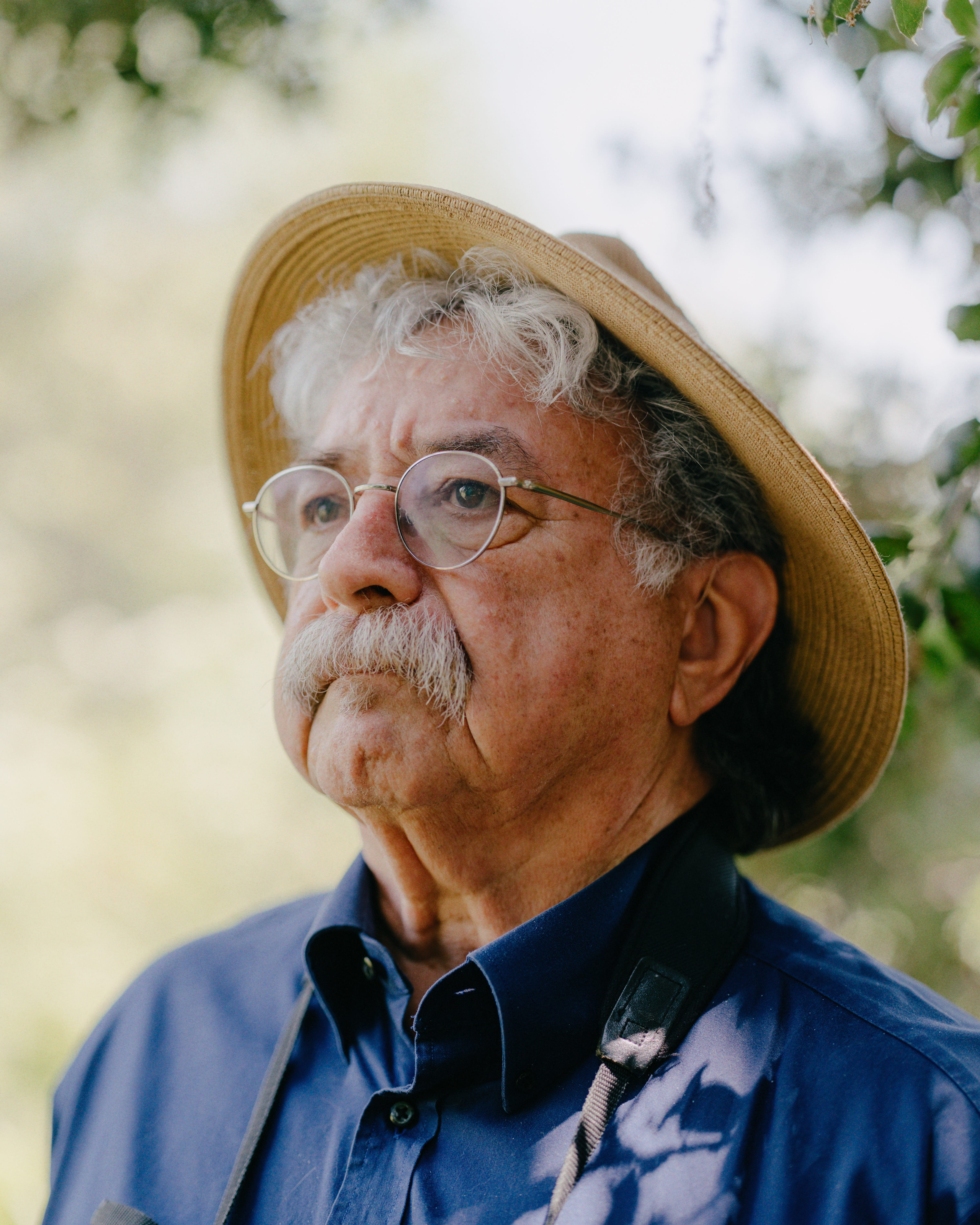
Louis Sahagun was a reporter for the L.A. Times who retired this year after 43 years. He has strong opinions about the LA River and the state of the environment in Southern California. He is hesitant to call the river a river. To him, it’s more of a sewer or a storm drain because the majority of the water in the channel doesn’t occur naturally within the environment–about 90 percent is urban runoff while only the remaining 10 percent originates from natural sources. He questions those who say that a natural ecosystem exists at the river because most of the species that live there are non-native and invasive, and because the flow of treated runoff is too warm to support native species including steelhead trout. He also criticizes the pace of efforts to revitalize the river. As he sees it, little has happened since the launch of various master plans over the years. If anything, delayed revitalization has led to deterioration.
The following interview between Louis Sahagun, Julia Meltzer, and Virginia Espino has been edited for clarity.
JM: Hi, Louis, so nice to have you with us. Tell me about yourself.
LS: I recently retired as a reporter at the Los Angeles Times. I was a junior college dropout when I started working there as a floor sweeper in 1973. I had no dream or desire of being a reporter at the time. Zero. But je ne regrette rien—I think that’s proper French!—I regret nothing. Somehow, I worked my way up into a full-time staff writer position and held onto it for 43 years.
JM: Where did you grow up?
LS: My very first memories in life were of my family’s home at a farmworker ranch called El Rancho de Don Daniel in what is now known as the Whittier Narrows area off the Pomona Freeway, about 25 miles east of LA. I would not call it quaint by any means. But, man, was it wonderful. Those early memories are of a place teeming with wildlife of all kinds: western pond turtles and clouds of tadpoles in clear water–not the non-native red-eared slider turtles you see today. I even remember the consternation among my family members when the Army Corps of Engineers came in and announced, “All you Mexicans have to get out of the bushes and get out of here because we’re building a dam here.”
Whittier Narrows Dam was built to help prevent intermittent, but nonetheless potentially catastrophic flooding from heavy rains. The safety it provided helped spark a proliferation of mostly working class Chicano families from there all the way to Long Beach. Now, however, that very dam is classified as one of the most unsafe dams in the United States. At risk are 1.4 million people who live downstream. Right now, a renovation effort is underway that will cost, I think, close to $500 million.
JM: Quite a history, Louis! Tell me about your parents.
LS: My mother’s folks were from Sonora, Mexico, and there were 13 children in her family. As farm workers, they moved around a lot in the San Gabriel Valley and Los Angeles areas. After World War II, they lived in Covina, Chavez Ravine and Whittier Narrows. My dad’s side was from Jalisco, Mexico, his dad ran a tiny dairy in Rosemead.
My mother, a housewife, and father, a machinist and foundry worker, never finished 6th grade. Somehow, they managed to raise four sons and a daughter in a little house in Covina. I am the oldest, and the only one with a college degree. In 1975, I deliberately snagged a night shift job as a copy messenger in the editorial department so that I could go to school during the day. I went to East LA City College and got an A.A. Degree and then went to Cal State LA to get a Bachelor of Liberal Studies degree.
JM: How old were you when you finished?
LS: I was 27–a late bloomer! I barely managed to graduate from high school, then worked at various factories before landing a job at the L.A. Times as a floor sweeper around the hot-metal linotype machines the newspaper used before it switched to computers. But back then, even the very lowest echelon positions at the L.A. times were held by really exciting, smart people. One of the other floor sweepers, for instance, identified himself as an anarchist poet. “What the hell is that?!” I wondered aloud. At lunch, my fellow workers talked about Nietzsche, they talked about Zen, they talked about romantic poets such as Byron. I was electrified by those discussions. So, I went on a crash course of self improvement. I started reading like crazy, mostly the classics, and tossing my own opinions around like confetti.
One day, I marched into the book review editor’s office and I said, “Hi there. I’m Louis Sahagun. I’m a copy messenger in editorial, and I’d like to review a book for the L.A. Times.” Digby Diehl, who was book review editor at the time, smiled and asked, “Well, what have you done?” “I haven’t done anything,” I said. “Right now, I’m finishing a liberal studies degree at Cal State LA.” “What makes you think you can come in here and review a book for The Times, Louis?” I said, “Digby, what have you got to lose, man? I’m a voracious reader. Give me a shot. If you don’t like it, throw it away.” He reached up and pulled a massive book off a shelf, then slid it across his desk and he said, “Give me 200 words on this in two weeks.” I read the book and reread it. I wrote the review and rewrote it many times. Two weeks later, he looked it over, frowned and said, “Wow. This thing needs a lot of work–but I can fix it.” Then he handed me a new biography of Lord Byron and said, “Give me 200 words on this in two weeks.”
Over the next two years, I reviewed roughly 100 books for The Times. I worked my way up in the newsroom, too, by volunteering to write headlines and take dictation from reporters in the field. That was the start of the whole thing, and by that I mean a lifelong career in journalism.
JM: What drew you to write about the natural world?
LS: My earliest memories were so crisp, clear, and beautiful that they provided a sort of baseline from which to gauge the impacts of the explosive growth of what is now one of the largest, most densely populated and influential megalopolises on Earth. As a reporter at The Times, I had a front row seat from which to chronicle those impacts on species once so common that I had to watch my step to keep from stepping on them. There are only a few hundred federally endangered San Gabriel Mountain yellow-legged frogs left in the canyons they evolved in over thousands of years.
One thing about my take on all that, though, is that I never saw myself as a savior sent to speak truth to power, or any such thing. My dad was pretty conservative, and he believed that citizens have the right to do whatever they want on private property. My aim was to be unbiased, believe it or not, showing all sides and not showing favor to any.
When it comes to environmental issues in Southern California, there are no good guys.
JM: Do you feel like you were committed to telling those stories about the natural world in California because you saw it changing?
LS: Yes. I tried to offer a sort of blue-collar take on some very complex environmental dilemmas. For example, to my mom and dad, the Owens Valley and eastern Sierra Nevada range was an absolute working man’s paradise, and my beat at The Times called for keeping an eye on the Los Angeles Department of Water and Power’s controversial aqueduct systems in that region. They were built a century ago, after L.A. agents posing as ranchers and farmers bought much of the land and all of the water rights in the region.
So, I covered the LADWP’s activities up there like a war correspondent on behalf of The Times and its readers, environmentalists, lawmakers and folks like the ones I grew up with. I just immersed myself—I was like a heat seeking missile. For me, the payoff was a kind word from my boss and a call from a relative saying, “Hey, man, cool story.”
Then there’s the L.A. River. As a concrete flood control channel, it gets a lot of things right. But I take issue with environmentalists who refer to its murky, unnaturally warm perennial flows of chemically-treated urban runoff as a nature sanctuary bursting with biological diversity.
In my articles, I didn’t mince words: a close look is liable to cause a lot of hand-wringing because the L.A. River nowadays exists as a 51-mile-long breeding grounds for voracious non-native species: crayfish, bass, carp, African clawed frogs, cannibalistic bullfrogs, striped Amazon sailfin catfish.
Native fish species including 36-inch-long steelhead have disappeared. The oak and sycamore trees scattered along an 8-mile-long soft-bottom stretch of the river north of down, however, remain an important rest stop for migrating birds.
Some people say the soft-bottom stretch of the L.A. River north of downtown has a “vibrant ecosystem.” But my articles pointed out that it is severely polluted with urban discards: clothing, shredded plastic, broken toys, automobile tires and shopping carts. An estimated 90 percent of the water flowing down the L.A. River channel is recycled urban runoff, and about 10 percent of it flows down from the mountains to the north, but only on occasion. Historically, much of the LA River was dry during the summer.
LS: All I’m saying is this: Take a good look before you start telling me about how wonderful it is that recreational fishing has returned to the LA River. Fishing for what? Eight pound non-native striped bass, Amazon catfish and carp?
On another front, environmentalists and LA County flood control officials are at war over famed architect Frank Gehry’s proposals to transform stretches of the river in chronically poor and densely populated cities south of downtown into a system of “platform parks” elevated over the channel’s floor. He has also proposed a cultural center overlooking the confluence of the LA River and the Rio Hondo, where local children would learn to play violin, perhaps via lessons provided by LA Philharmonic musicians pro bono.
Some environmentalists who do not live along the river hate this idea, and that really upsets me, even now, as you could tell. They seem to be saying, “Wait a minute. What we don’t want is more concrete. So, you poor people living along the river channel, just hang in there another 50 years or so until we figure out how to green it up again and get the concrete out.”
But that is never going to happen. Why? Because that river channel can become a lethal threat in heavy rains. So, the heads of the agencies tasked with managing it will look you in the eye, smile and say, “Your proposals for rewilding the river are pretty good. Don’t forget to bring them up at the next meeting of the L.A. County Supervisors.” But behind closed doors, I believe, they focus on other concerns.
People wonder why river restoration efforts seem to fizzle; why they don’t go anywhere. I believe it’s because the people in charge of maintaining that monumental aging infrastructure are not interested in a river restoration proposal bearing a whiff of unintended consequences that could hurt people at a time when climate change is increasing the frequency of catastrophic flood events.
On another level, however, transforming the river into a massive flood control project in 1938 effectively divided LA into two communities–a prosperous Westside and struggling Eastside–that face each other across a concrete divide. The working-class Latino neighborhoods and schools east were rundown and overcrowded, but had little political power to turn things around. It didn’t help that L.A. Times coverage for decades framed the Eastside as a landscape of despair, gangs, structure fires and subversive groups standing in the way of freeway construction projects that would displace tens of thousands of people.
More recently, land adjacent to the channel has been targeted for development of parklands and so-called “river revitalization” projects–condominiums, bars and restaurants, corporate offices–that have triggered real estate investment and gentrification that is pricing working-class families people out of their homes in areas such as Elysian Valley.
JM: I just had this other thought, Louis, and it’s not the first time I’ve thought this. I feel it very clearly now. There was this idea about bringing the real river back, and starting to think about ways to not have it taken over by development forces. But it was too late.
But, it’s fair to say that a few recent improvements are getting rave reviews. For example, that orange bike and pedestrian bridge between Elysian Valley and the G2 carries hundreds of people each day.
LS: I couldn't agree more. Long-awaited “river revitalization” may well be underway. But as a work of habitat restoration, the LA River has its problems.
But, I do like that Orange Bridge.
-
Click here to explore more of the Cultural Atlas at takemetoyourriver.org!