
Healing Soils
Learnings from Harry Boyajian

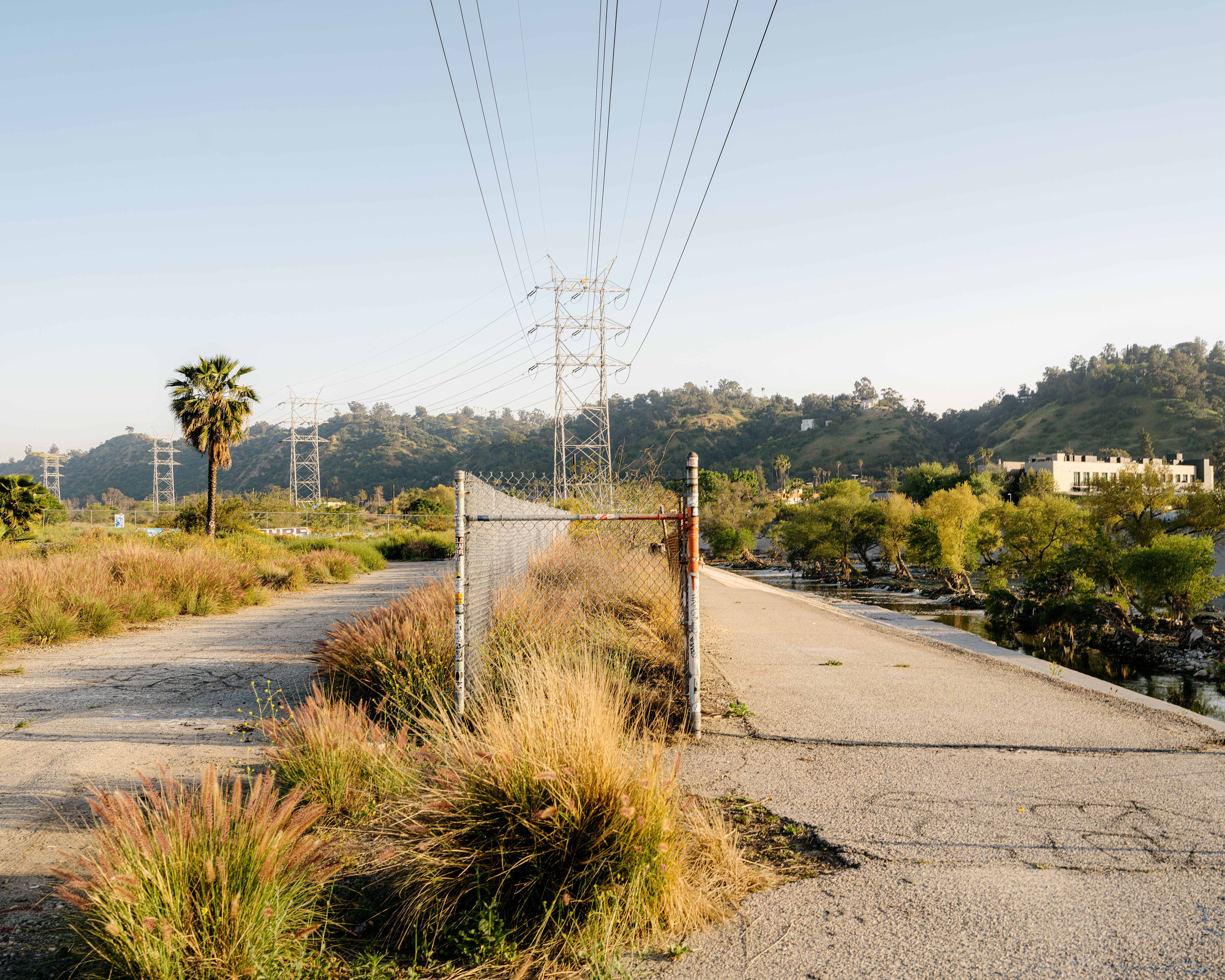
The Bowtie occupies 18 acres of undeveloped industrial land along the LA River, located on the former headquarters of Southern Pacific Railroad, what once was a bustling railyard and major local employer. The idea to convert these lands into park space began pretty shortly after rail operations shut down, with local residents banding together to advocate for increased green spaces in these park poor communities. In 2003, California State Parks bought the land where Rio de Los Angeles State Park is now located along with the Bowtie property to preserve the land and support conservation and restoration along the Los Angeles River. Rio de Los Angeles State Park opened in 2007 while the Bowtie land remained idle for more than a decade.
Beginning with Clockshop’s first commission at the Bowtie in 2014, Michael Parker’s The Unfinished, our work has challenged what public art looks like, and what it can accomplish. Driven by a mission to connect Angelenos to public lands through arts and culture, up until 2020 the Bowtie served as the location for much of Clockshop’s commissions and programming; seeking to connect residents to this site that will serve as new green space for Northeast LA. Building upon a local legacy of advocacy and activism that spans 40 years, Clockshop is committed to the fulfillment of the Bowtie into a public state park. You can read more on that work here: Behind the Scenes, and our ongoing work to secure and raise funds for a Community Center at the future park.
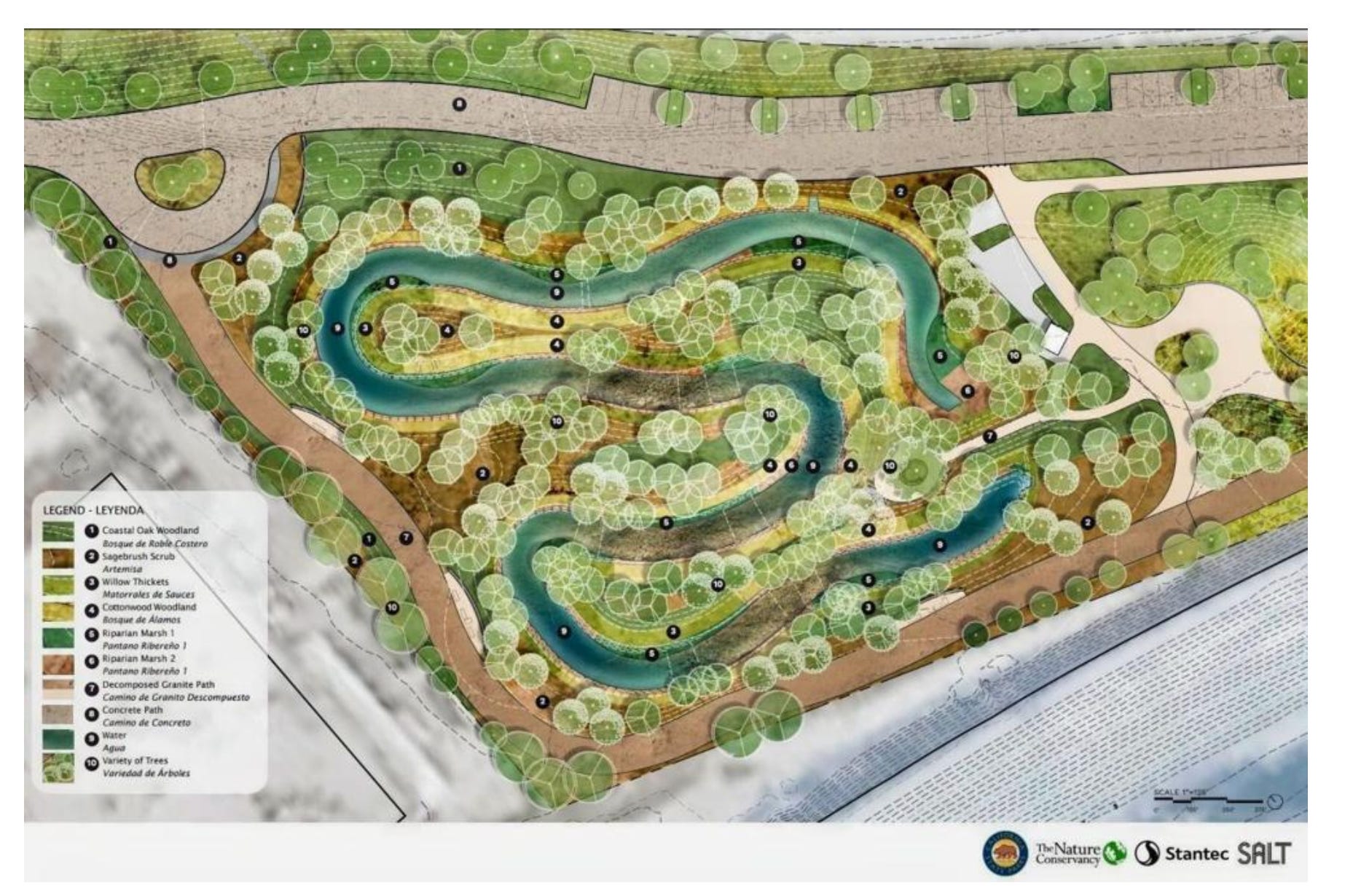
These days the Bowtie is a bit more active then when Clockshop first began commissioning work there in 2014. Progress on The Nature Conservancy’s (TNC) Bowtie Wetland Demonstration is well underway, with an expected opening date of Spring 2027. When completed, this demonstration will daylight an existing storm drain and transform the site into an open space filled with native plants, a water way, and walking paths.
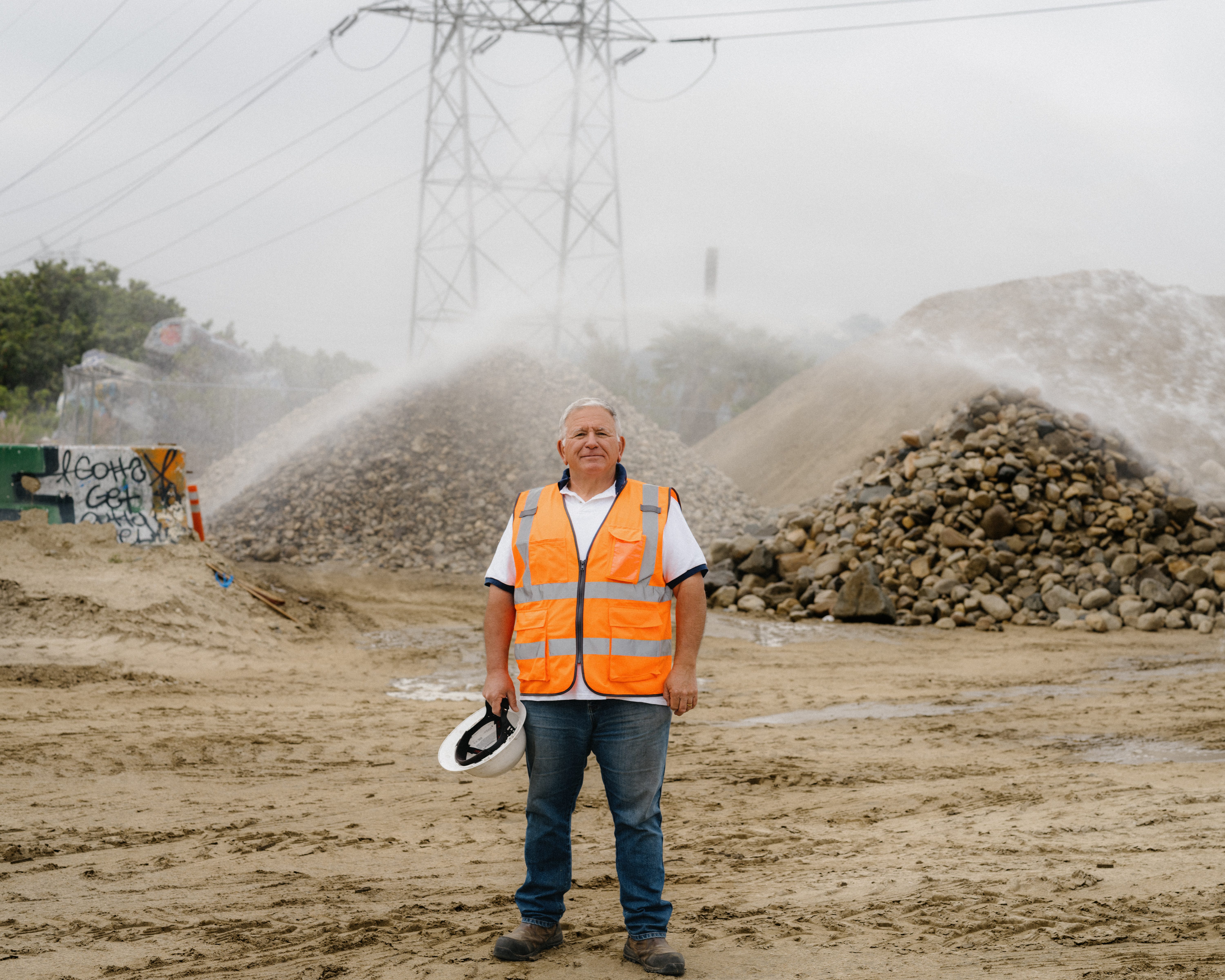
Earlier this year, Clockshop staff were granted the opportunity to visit the site and meet with some of the TNC staff as well as the construction staff that were managing the daylighting process. It was here where we met Harry Boyajian, President and Operations Manager of El Capitan Environmental Services, the contractor in charge work on the site. Harry’s extensive knowledge of the L.A. River and his work with soil remediation were apparent in his explanation of the work currently underway. He’s worked on other river-adjacent sites and was excited about this site increasing green space and access to the river.
To learn more about Harry and his path to this current line of work, we reached out for an interview as a part of our Take Me to Your River project. Julia and I met with Harry, along with Darin Son of Geosyntec Consultants, to learn more about his upbringing and his passions for the environment.
It’s difficult to succinct Harry’s story, it’s one that without being dramatic, truly speaks to the human condition. It’s a story about resilience, sacrifice, migration, and an everlasting hope that fuels all that he has achieved in life. It’s one that begins a ways from Los Angeles, in the then Armenian Soviet Socialist Republic.
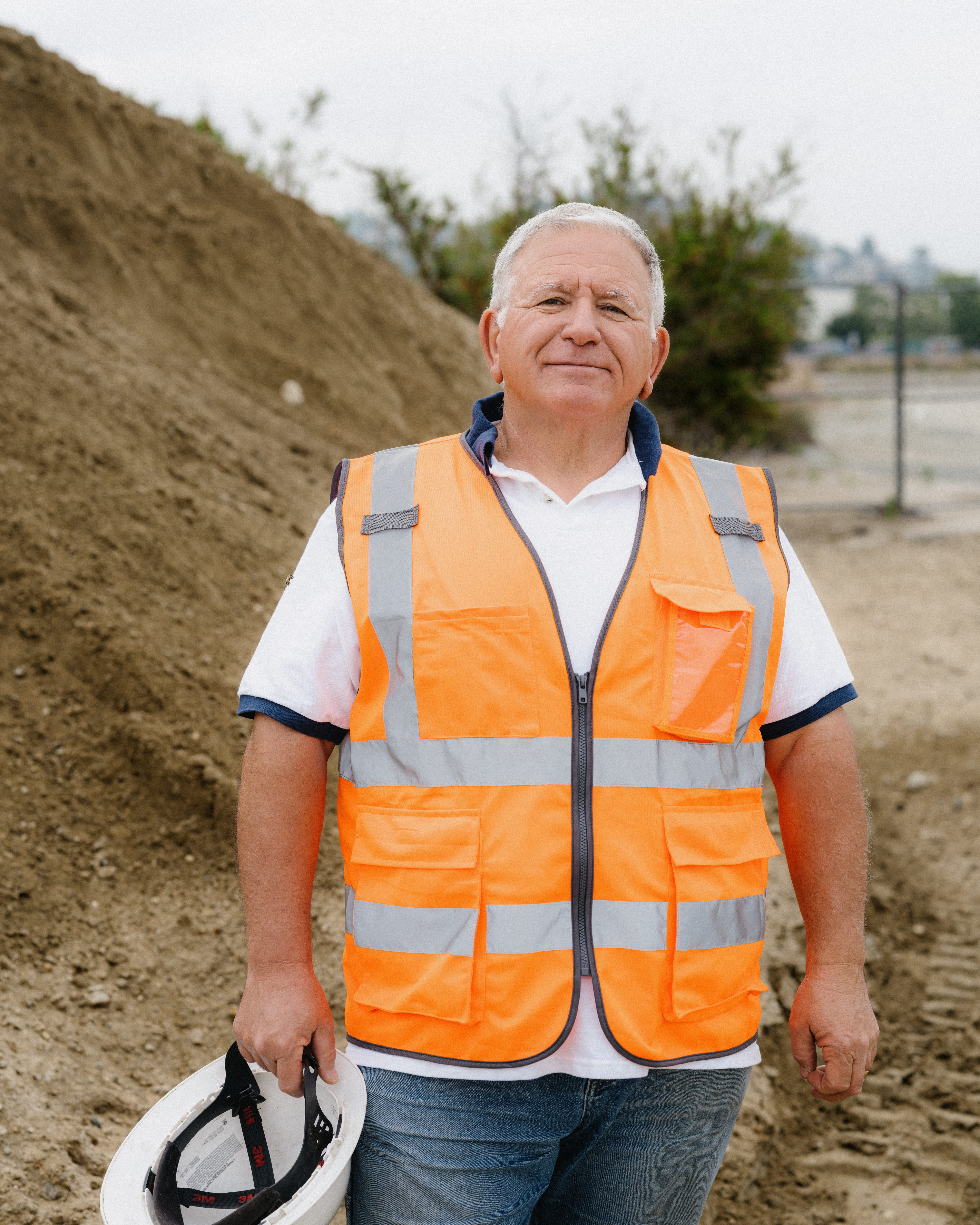
For more than 34 years, Harry Boyajian has directed and managed site remediation of polluted lands all over the United States. His work has taken him from North Dakota to Arizona, and all up and down California where he’s based. Closer to home, Harry has worked extensively on sites adjacent to the LA River, post-industrial land that was once home to thriving factories and other commerce centers that were left behind once these businesses shuttered.
“I have done a lot of projects near the LA River, and the reason is because the majority of the industrial sites are built right next to the river for water use.
Unfortunately, in the process, they impacted and polluted the surrounding soil. We have excavated and sent for treatment close to— I would say—a million and a half tons of material over the 20 years I've done work there.”
Harry’s path to his current profession is one that started thousands of miles away in his native Armenia, along with a little encouragement from his grandmother.
“When I was a little kid, she used to say to everybody, ‘My grandson is going to become an engineer.’ I guess she knew something I didn't.”
Harry grew up exploring and developing an appreciation for the natural world around him. The landscapes of Armenia—in particular its ravines, rivers, and creeks—left a lasting impression on him. Whenever any opportunity presented itself to escape the city, a young Harry was the first to jump on board, preferring to be in rural areas or on a farm.
“In my earliest years, I grew up in a village and during the school year, we would come back to the city, which I really didn't like much, to be honest. Even now, I still don't like it.”
Then a part of the Soviet Union, Harry, along with his family, left Armenia, immigrating to Lebanon when he was 12 years old, seeking a better life. When civil war erupted in Lebanon in 1975, his father sent them to neighboring Syria where they stayed for the next fifteen years. If Armenia’s stunning landscapes taught him about the importance of the natural world, his time in Syria taught him about the value of the built environment. Living in some of the oldest and continuously inhabited cities in the world, Harry refers to Syria as an “open-air museum”—a testament to human ingenuity and adaptability to their surroundings.
When Harry was in high school, he worked as a nurse at his father’s outpatient clinic, learning the ins and outs of that line of work. His father mentored him and encouraged him to follow in his footsteps. The year he was supposed to graduate high school, his father fell ill and began to rapidly deteriorate in health. Harry continued with his studies and took the entrance exams, but unfortunately, before his results came out, his father had passed away.
“I was the eldest son. I have no brothers—I have two younger sisters—and I had to take care of my family. I decided not to go to medical school because it requires a lot of time, a lot of dedication, and I had to work to support my family. So I made a little detour into engineering. That was not planned at all.”
After studying civil engineering for five years at the University of Aleppo, Harry was faced with one last tough choice. With only four exams separating him from his degree—exams that were not technical but on other subjects he was obligated to take—he decided to forgo these assessments for a bigger dream of his.
“I chose not to take my last four exams, because that meant I could not come to the United States. At the time, the government would not let me out [of the country] if I graduated as a civil engineer.”
In 1990, Harry immigrated to the United States, arriving in Los Angeles to a new reality and a new environment. Without a degree or any proof of his schooling, Harry made another detour and became a contractor, but with the added skills and knowledge of a civil engineer.
“When I came to the United States, I didn't even have any proof that I went to one year of college, because they would not even give you your transcripts if you left.”
Harry worked for various geotechnical, construction, and environmental companies before starting a business of his own, specializing in infrastructure and remediation work—a perfect combination of his interests, and a reflection of his upbringing.
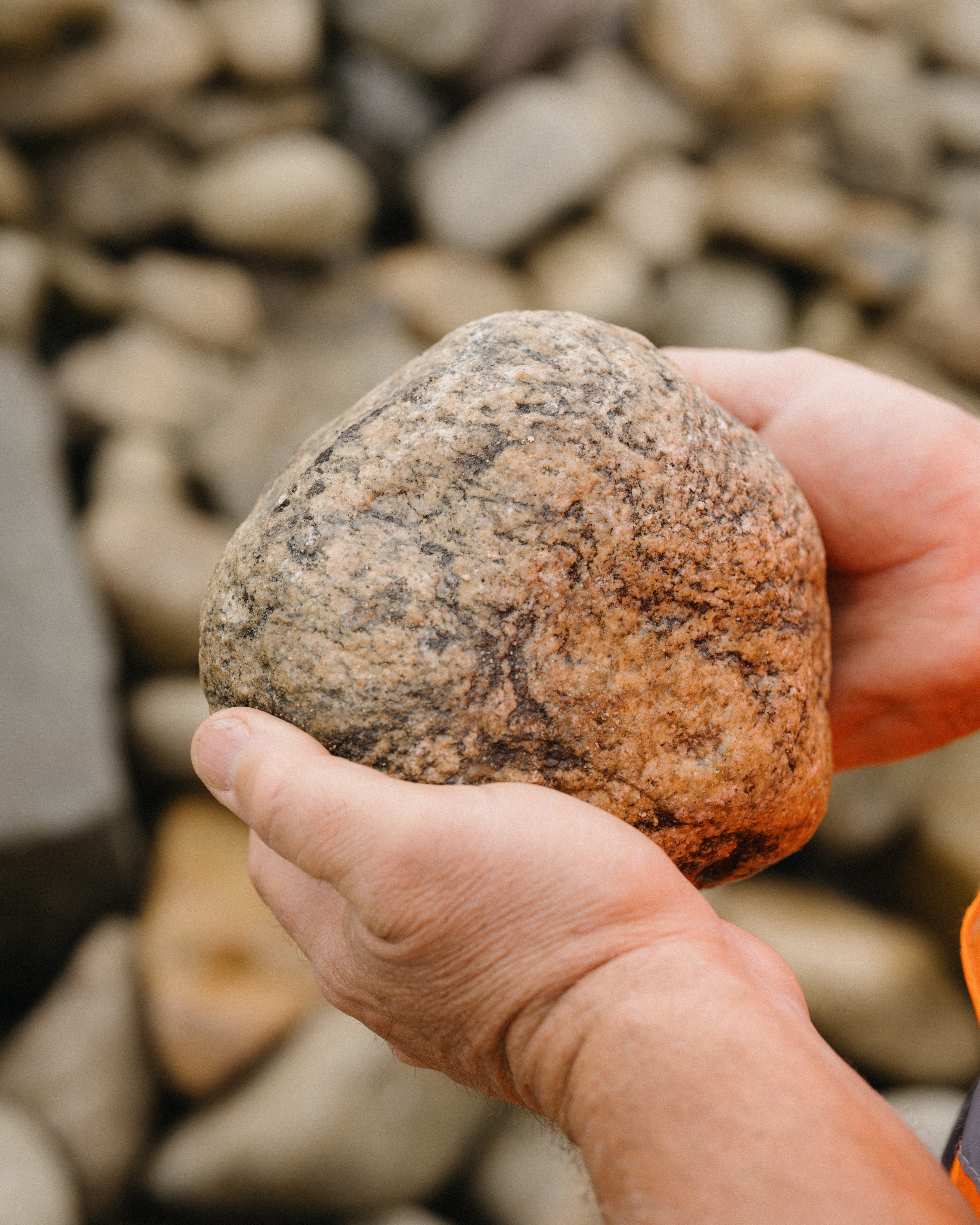
“I loved being around nature, part of nature in the dirt and trees and ravines and the rivers and the creeks. I loved to play with dirt all my life.”
To better familiarize himself with his new surroundings, Harry turned to an important character in Los Angeles geography that others often overlooked: the LA River. In looking at the geology of the Los Angeles Basin, all of the alluvial plains and topography were created by the river and its tributaries over thousands of years. While currently encased in concrete, the flow of the river brought downstream alluvial deposits that made the land fertile; in times of industry, the river also served to transport pollutants.
“The LA River created all this—the formation of the mountains, how the contaminants migrated into the soil. It just depends on the type of geology and the layers of soil you have. Since I’m a licensed driller, we installed thousands of monitoring wells everywhere—to study and install them and log the findings.”
This knowledge has served Harry well in the various remediation projects he’s undertaken along former industrial lands on the LA River, including one where he’s working on the Bowtie parcel, part of the former Taylor Yards that once served as the headquarters of Southern Pacific Railroad. Located along the soft-bottomed Glendale Narrows portion of the river, the Bowtie is surrounded by the Northeast LA neighborhoods of Glassell Park and Cypress Park. Work is currently underway to complete the Bowtie Wetland Demonstration Project, led by The Nature Conservancy, to improve water quality, enhance habitat, increase climate resilience, and provide access to open space for people and wildlife.
Remediation efforts at the site have been straightforward. Construction of the wetlands is limited to a portion of Taylor Yards where former administrative buildings were located. The other section of the site, where the heavy maintenance work for the trains was undertaken, is more polluted, and there is no active work at the moment.
The Bowtie Wetland Demonstration Project removed the top two feet of existing soil across the 3.5-acre site as part of the remediation process, which was completed in October 2024 and approved by the Department of Toxic Substances Control (DTSC) in June 2025.
“We conducted three rounds of sampling here, and this was probably the least impacted. The reason is because this was where the administrative building was—it was mostly just the parking lot. So I don't think there was any industrial operation conducted in this area.
We went and removed about two feet of it, and we shipped about 20,000 tons of material that went to local landfills. Before we shipped it, we took fresh samples because if the results are more than one year old, the disposal facilities will not recognize them. So we conducted a fresh round of sampling, and it confirmed that we don't have much [pollutants] in the soil.
They did find a little trash pit, which the archeologist went and sifted through. We took some samples, we analyzed it, we profiled it, and the material was sent to Soil Safe for treatment as a non-hazardous material. Maybe two, three loads, but that's all we had.”
Completion of the Bowtie Wetland Demonstration Project is expected in 2026, although the site will be closed to the public for a year to allow for the vegetation to establish itself. While vegetation is being established, The Nature Conservancy aims to conduct programming for local residents and schools.
Working on this site has been rewarding for Harry, who, in his more than 30 years of experience in this field, has seen it all. What surprised him about this project in particular was not the state of the Bowtie but the passion of the individuals leading this project—a nice change.
“The most unique quality is not the site—it is the people who spearheaded this project. The Nature Conservancy is the main driver of this whole thing. I just thought that this would be a great project for us to do, but I never expected that I would meet a group of people so dedicated, so goal-driven, and so passionate and insistent about doing these revitalization efforts.
That was the biggest surprise of this job.”
Thank you, Dario, for this wonderful interview. I had no idea of the people behind the work going on at this site (except for Danielle Stevenson, the mycologist, whom we met at another Clockshop event). I appreciate learning Harry Boyajian's story and about his love for the river!
Great article Darío! An important highlight on a project I feel many are not aware of. It was so inspiring to read about Harry’s resilience. His passion clearly translates into the dedication to this work ~